
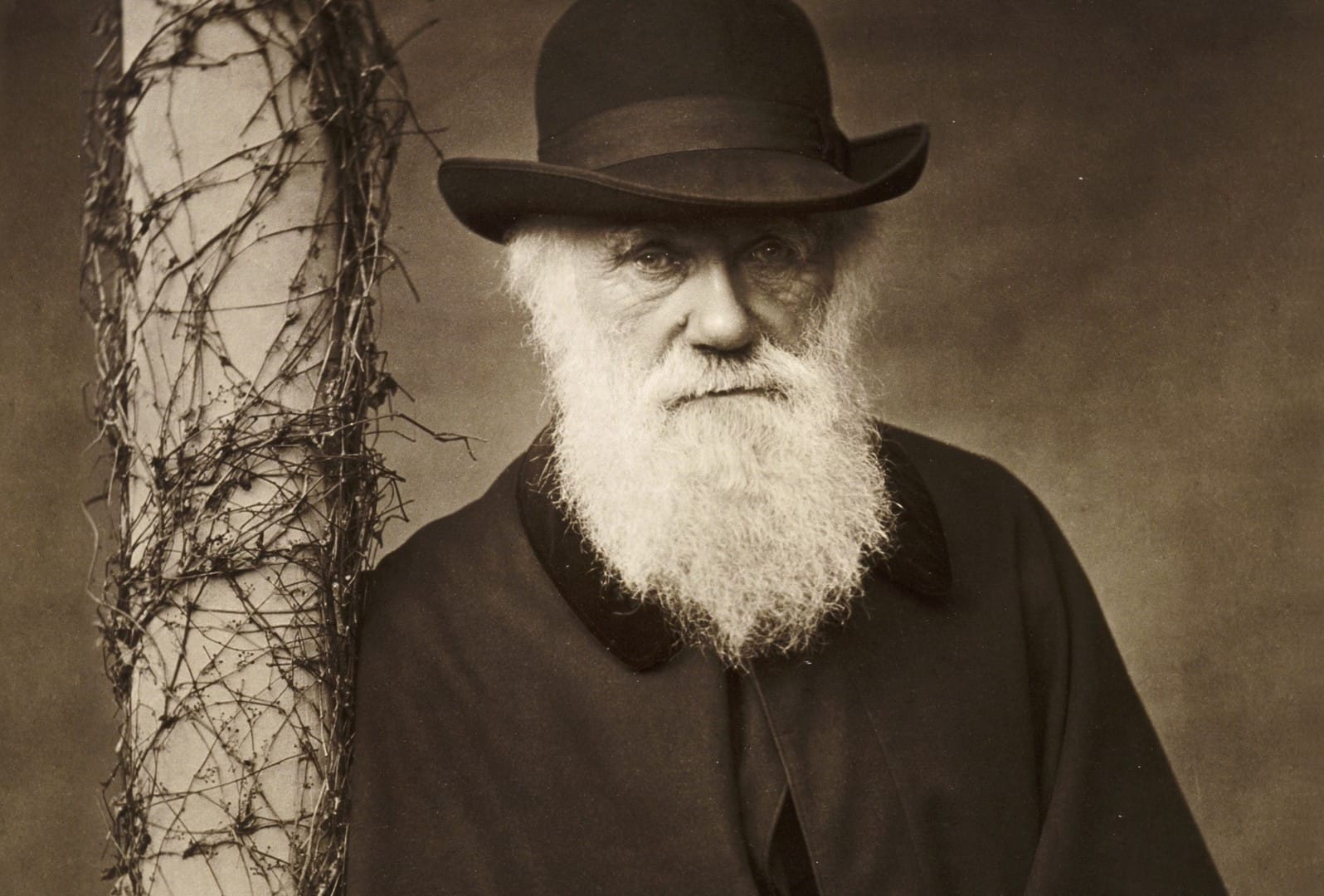
Charles Darwin's theory of evolution by natural selection, published in 1859, explains that all of life on Earth today evolved over the eons from common ancestors. And the essence of this grand theory can be captured in a single sentence:
Within a species there's always slight random variation in the hereditary traits of its members, and given the competition to survive and reproduce, those variations that happen to be most conducive to doing so will naturally tend to become widespread in the species.
So the process of evolution by natural selection involves the non-random 'selection' by nature of particular random variations. And the continuous occurrence of random gene mutations means that random variation – the fuel of this process – is ever-present. These mutations have several causes, including gene copying errors.
How conducive a variation is to survival and reproduction depends on the environment in which the members of the species are living. So when the members become separated into two populations – perhaps by a mountain range or an ocean, or simply distance – and face different environments, natural selection leads the populations to evolve in different directions. And they may eventually diverge so much that they can no longer interbreed, thereby becoming separate species.
Thus, the steady accumulation of innumerable small changes over billions of years has led to the extraordinary complexity and diversity of today's plants and animals.
This beautifully simple but powerful theory, so often misunderstood and misrepresented, explains how the appearance of design in living things arose from a mindless process that's as natural as water flowing downhill.
Support my work

My dream is to work full time as an independent researcher and a writer – I currently rely on two part-time jobs. However, I also want my writings to remain free and ad-free. So please consider helping fund my work – including helping me pay for books and online resources – by making a one-time or monthly donation of your choice.
You can also support my work just by sharing this article.
Feedback
I view my published writings as still works in progress, and welcome feedback about both the writing and its content, however minor. I also welcome feedback about the website. You can comment below or email me.
Referencing this article
If referencing this article, you should include the date of reading, as the content can change. Also, you can save the current version in the Internet Archive and then link to the archived copy.
Article history
Past versions of this article are available in the Internet Archive here – and, for previous locations, here and here. There's also an archive of this article on GitHub.
Acknowledgments
This article was inspired by the book The Moral Animal by Robert Wright, which presents the theory of evolution by natural selection in one sentence in the first chapter. My presentation of the theory in one sentence was based on Wright’s.
My understanding of the theory of evolution by natural selection comes mainly from the books The Selfish Gene and The Blind Watchmaker, both by Richard Dawkins.
The point that evolution by natural selection is as natural as water flowing downhill comes from the book The Adapted Mind, by Leda Cosmides and John Tooby.
The Theory of Evolution by Natural Selection in One Sentence
Darwin's beautifully simple idea